

Colorado has a new DUI-related law on the books. On July 29, 2023, 17 year-old Magnus White was tragically hit by a car and killed while riding his bicycle in Boulder county. He was a member of the US Cycling national team, and was doing a training ride. The driver who hit him was not asked to do a test for alcohol or drugs at the scene, although friends later testified that she was drinking in the hours before the crash. She was eventually convicted of vehicular homicide and sentenced to four years in prison. However the White family has described the pain and uncertainty of not knowing about her blood alcohol level and waiting two years for the conviction.
Summary of Magnus’ Law
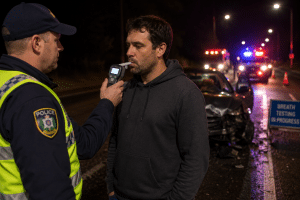
Because of this, the family fought for a law that was recently signed by Governor Polis, the bipartisan Senate bill 26-132 called “Magnus’ Law.” This law requires that law enforcement officers offer voluntary breath tests at the scene of any accidents resulting in serious injury or death. Those in support of the law argued that if you don’t test for alcohol impairment right there at the scene, you may never know if the person had alcohol in their system at the time of the crash. If the driver does the test and it shows alcohol in the system, that can serve to investigate impairment further. If the driver does not have alcohol in their system, it can also help to avoid false accusations of impairment.
Key points related to this new DUI law
The law is tricky because while it probably will make it more likely that a driver would do that breath test at the scene, it also doesn’t have the “teeth” that you might think at first glance. The law does not (and cannot) require a driver to do a chemical test for impairment. The new law requires that officers offer the driver a voluntary preliminary breath test (PBT).
The first key point to notice is that the drivers are asked to do it voluntarily: drivers cannot be forced to do a PBT, they have the constitutional right to refuse this handheld test done on the roadside. There cannot be a penalty to the driver for refusing the PBT, and their refusal cannot be used against them in court.
The second key point is that this is offering the preliminary breath test, which cannot actually be used as evidence of impairment in a court case. Instead, it can be used to establish probable cause to arrest the driver for DUI and request that they complete an evidentiary blood or breath test. This evidentiary test would be given at the police station. Drivers can refuse the evidentiary tests, but there are automatic penalties for that refusal, and that refusal can be used as evidence against them in court.
The new DUI-related law might not change much
Although hopefully this new law will lead to better evidence of impairment level in cases where someone has a serious injury or is killed, in concrete terms, it may not change much. Having an accident was already generally considered sufficient reasonable suspicion for an officer to investigate a driver for DUI, and the driver can still choose to refuse the PBT at the scene. The driver can also legally refuse to perform the roadside field sobriety tests.
The main difference here is that since officers are now required to at least offer the test, overall more drivers who have had accidents may be tested. It seems especially likely that sober drivers will be more likely to take the tests, because it gives them the chance to provide evidence of their sobriety. Impaired drivers may also not know or understand that the test is optional, so offering it may encourage more impaired drivers to take the test as well. This new Colorado DUI law should lead to fewer victims and families suffering from the pain of not knowing if alcohol was a factor in their tragic situations.